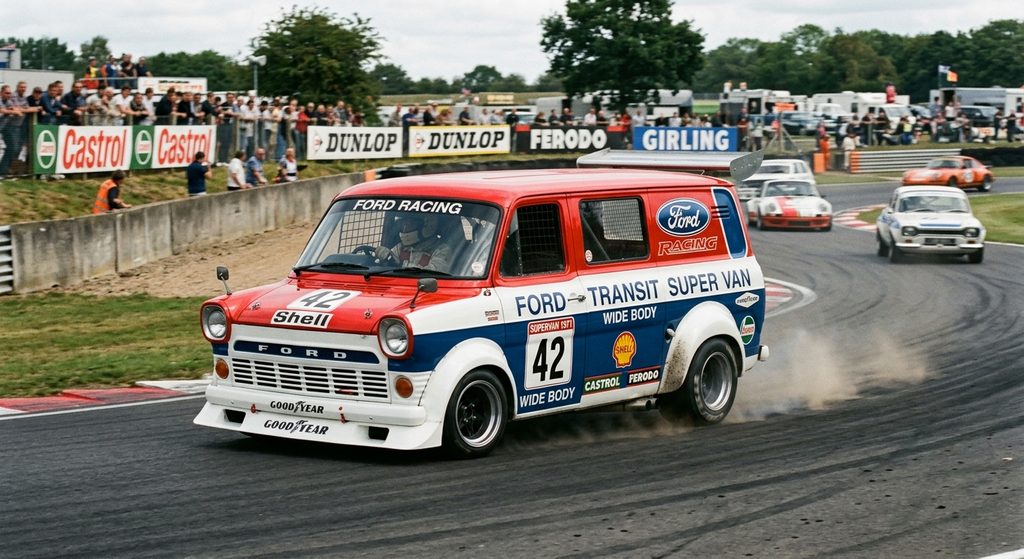
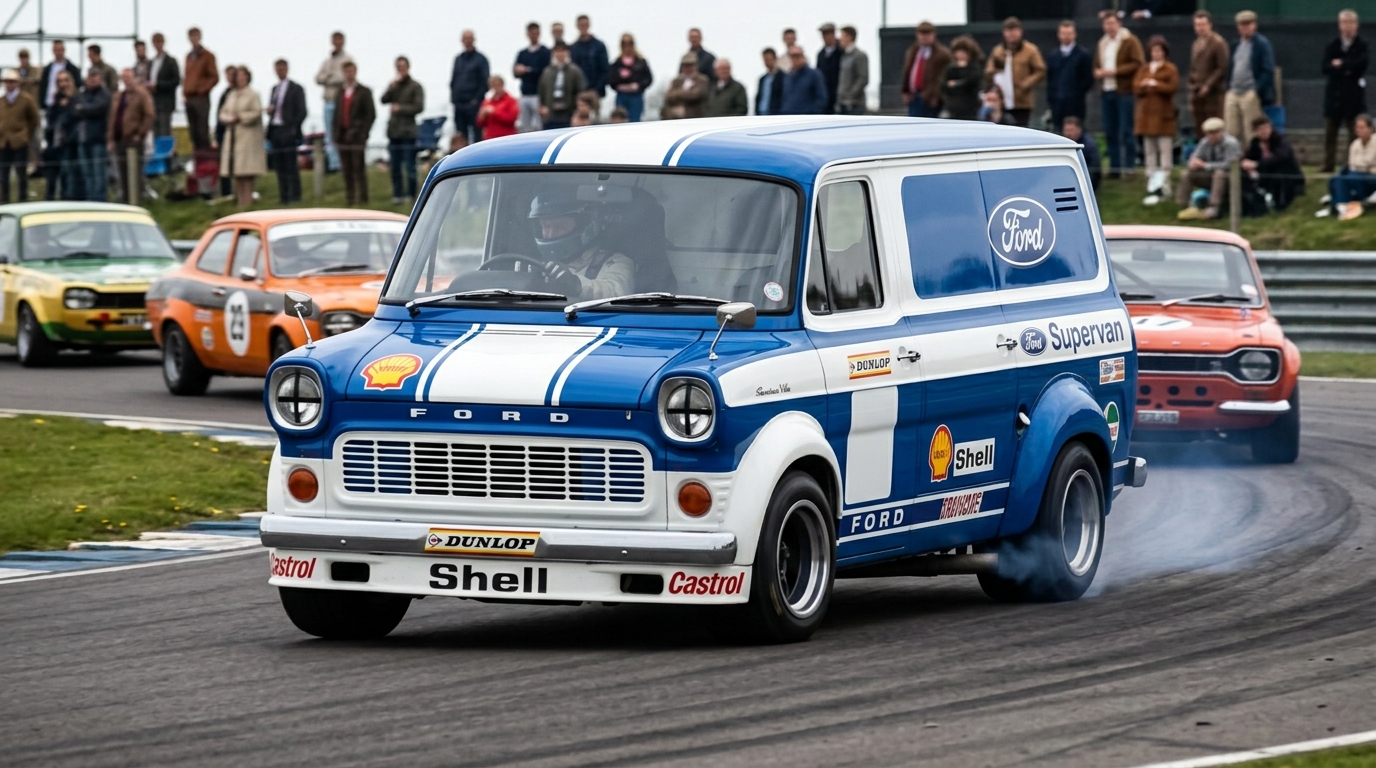
When you think of iconic 1970s race cars, sleek sports coupes, Formula 1 machines, and GT cars come to mind. But in 1971, Ford Motor Company threw out the conventional rulebook and built one of the most outrageous, memorable promotional vehicles in motorsport history. The Ford Transit Supervan was born.
Combining the boxy utility of Britain’s favourite commercial van with the mid-engined heart of a Le Mans-winning endurance racer. The 1970s “Supervan 1” became an instant legend.
1. The Birth of an Icon: Why Build a Supervan?
By the turn of the 1970s, the Ford Transit Mk1 had already established itself as a workhorse across the UK. Known for its reliability and cargo space, it dominated commercial sales.
However, Ford wanted to prove that the Transit wasn’t just practical—it was exciting. To capture public attention and showcase its high-performance engineering, Ford commissioned Terry Drury Racing to construct a one-of-a-kind promotional vehicle. The goal was simple: build a van that could outrun purebred sports cars on a circuit.
2. Under the Skin: GT40 Power meets Commercial Utility
While the exterior looked strikingly like a standard Mk1 Transit, underneath lay pure racing architecture.
- Mid-Engine Layout: To achieve proper weight distribution, engineers mounted a massive V8 engine directly behind the front seats in the cargo hold.
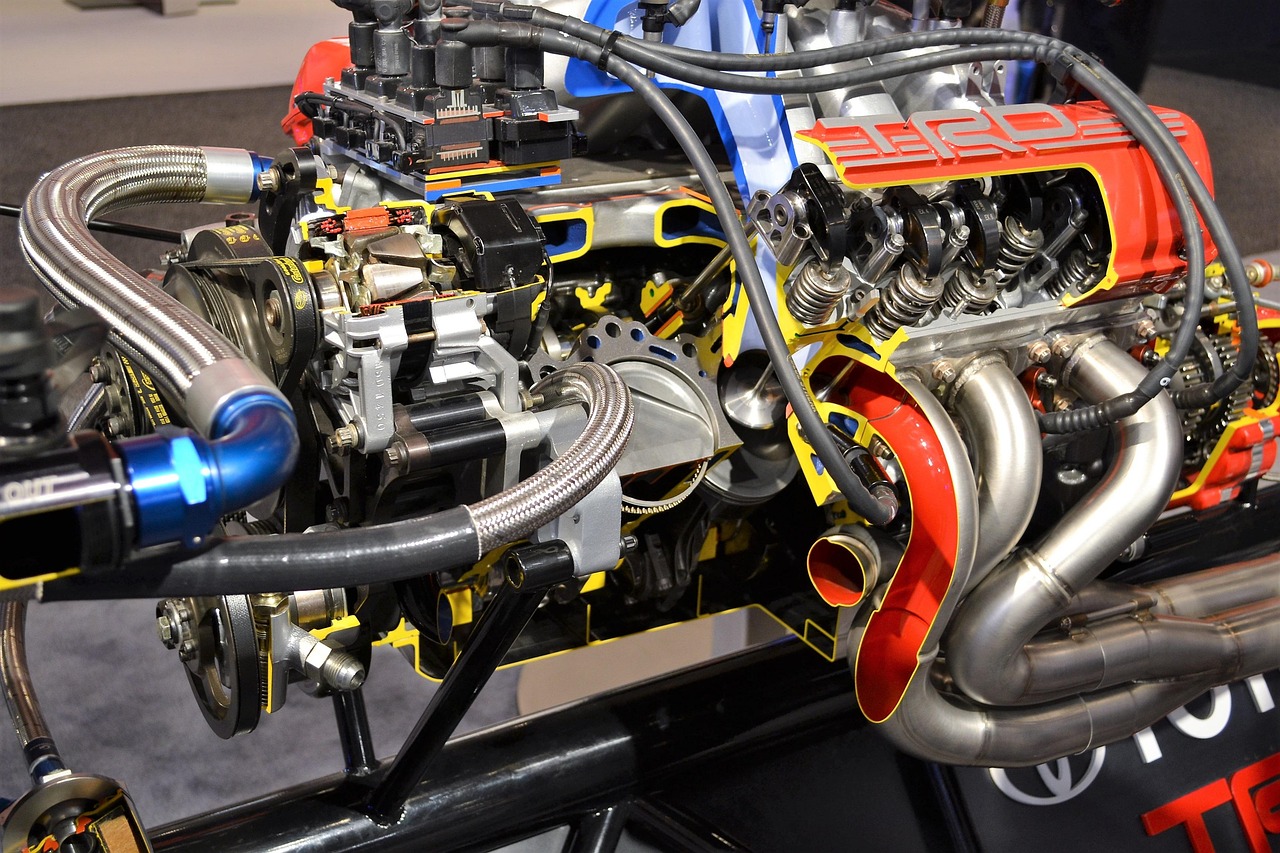
- Le Mans Heartbeat: The original Supervan was powered by a 5.0-litre Ford GT40 V8 engine, delivering around 400 horsepower—an astonishing figure for the era.
- Race Chassis: Instead of relying on a standard leaf-sprung van chassis, the body was grafted onto a modified GT40 spaceframe chassis, complete with independent racing suspension, wide racing slicks, and heavy-duty competition brakes.
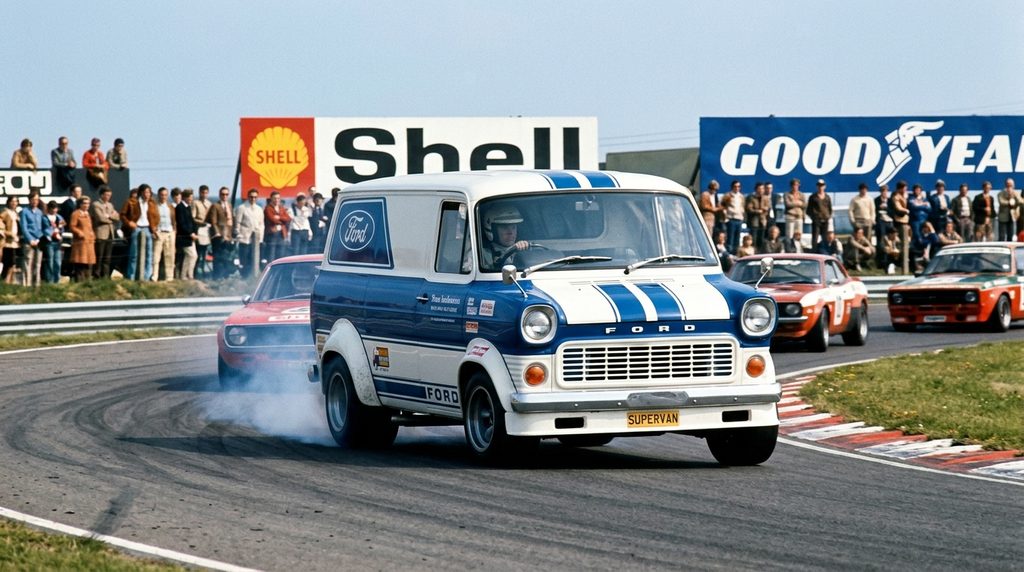
3. Aggressive 70s Styling & Wide-Body Stance
To accommodate the massive race-spec rubber and wider track width, the van featured aggressive flared wheel arches (wide-body kit), lowered suspension, and race-ready front chin spoilers.
Adorned in classic 1970s motorsport liveries—featuring iconic sponsor badges like Shell, Castrol, and Dunlop—the wide-body Transit looked menacing on the track. Despite the massive drag created by its tall, blocky profile, the GT40 V8 pushed Supervan 1 to top speeds exceeding 150 mph (240 km/h).
4. On-Track Demolition and Public Reaction
Supervan made its public debut at Brands Hatch in Easter 1971. Spectators were stunned as a vehicle shaped like a delivery van screamed around the circuit. Lifting its front wheels under hard acceleration and drifted around corners alongside contemporary sports cars.
It quickly became a fixture at airshows, hill climbs, and historic race meets across Europe, driven by famous racing personalities who pushed the mid-engined beast to its limits.
5. The Legacy: Paving the Way for Future Supervans
The original 1971 Supervan set off a tradition within Ford that spans over five decades:
- Supervan 2 (1984): Built on a Cosworth DFL V8 Formula 1 engine and a fibreglass body, reaching over 170 mph.
- Supervan 3 (1994): Featuring a 650-hp Cosworth HB V8.
- Electric Supervan 4 (2022+): An all-electric, multi-motor monster delivering roughly 2,000 horsepower.
Final Thoughts
The 1970s Ford Transit Supervan remains a high-water mark of automotive audacity. By merging a humble delivery vehicle with the DNA of a Le Mans champion, Ford created an unforgettable piece of car culture that still inspires motorsport enthusiasts today.